
Your website went down on February 20, 2026 and you couldn’t fix it. Thousands of business owners sat through the same thing that afternoon.
Key Highlights:
- Relying on a single Content Delivery Network (CDN) creates a single point of failure, risking significant downtime.
- The February 2026 Cloudflare outage highlighted the need for robust disaster recovery plans beyond a standard uptime SLA.
- True redundancy requires a layered strategy, including web server, CDN, and application-level failover.
- DNS failover is a critical component, automatically rerouting traffic when a primary provider fails.
- Effective redundancy isn’t just about backups; it’s about architectural resilience to prevent outages.
- Monitoring and regular health checks are essential to ensure your redundancy plan will actually work during a crisis.
Learning from the Cloudflare Outage of February 2026
The cause was a six-hour outage at Cloudflare, one of the largest Content Delivery Networks on the internet. If you’re not sure what a CDN does, here’s the short version: it sits between your web server and the people trying to visit your site. Instead of every visitor’s request hitting your origin server directly, the CDN caches your content across a global network of servers and delivers it from whichever location is closest to the visitor. Pages load faster, your server handles less traffic, and things generally just work better. Most CDN providers also handle DNS routing, DDoS protection, and SSL certificates, so when that layer fails, it doesn’t just slow things down. It can make your site completely unreachable.
That’s what happened in February. A lot of operators treat their CDN provider like a guarantee. You pay the bill, you get an uptime SLA, you move on to other problems. This outage broke that assumption apart. The disruption wasn’t caused by a cyberattack. It was triggered by an internal configuration change within Cloudflare’s own systems, which in some ways is harder to stomach, because it means well-run infrastructure can still fail from the inside out. Your disaster recovery plan can’t rest on the assumption that your provider won’t make mistakes. They will. The question is whether your architecture absorbs the hit or passes it straight through to your visitors.
If you’re running a WordPress site on a single CDN with no fallback, that question is already answered. You just haven’t been forced to confront it yet.
Overview of the Incident and Its Industry Implications
Here’s the breakdown. The outage traced back to a bug in Cloudflare’s Addressing API, introduced during an automated cleanup deployment. The system was supposed to replace a manual removal process for BYOIP (Bring Your Own IP) prefixes. Instead, an API query passed a flag with no assigned value, and the server read the empty string as a command to queue every returned BYOIP prefix for deletion. So rather than cleaning up a few entries, it started yanking Border Gateway Protocol prefixes off the internet wholesale.
About 1,100 prefixes were withdrawn before an engineer killed the process manually. That’s 25% of all BYOIP prefixes globally. With those prefixes unreachable, websites and applications just stopped responding. Thousands of users across the US and UK lost access to platforms like Uber Eats, Bet365, Wikipedia, and Steam. The total incident ran six hours and seven minutes, with most of that time spent restoring prefix configurations to their prior state.
Some customers managed to restore service through the Cloudflare dashboard by re-advertising their IP addresses themselves. Around 300 prefixes weren’t that lucky and needed manual intervention from Cloudflare’s engineering team because a secondary bug had stripped service configurations from the edge.
Cloudflare published a thorough post-mortem and is actively strengthening deployment safeguards. Credit where it’s due. But the structural takeaway still stands: if your business treats a single CDN as the backbone of availability, one bad automated deployment on their end can take you offline for hours with zero manual intervention available on your side. That’s not a vendor problem. That’s an architecture problem. For businesses anywhere from Bucks County to Montgomery County that depend on web traffic for leads and revenue, the risk is real and the fix isn’t complicated. It just takes planning before the next incident forces the conversation.
Understanding Layered Redundancy Strategies
Redundancy isn’t a product you install. It’s a way of thinking about your infrastructure. The word “layered” matters here because a single backup sitting in a closet somewhere is not the same thing as a system designed to keep running when pieces of it break.
The idea is simple enough: no single layer of your setup should be able to take everything down with it. Web server dies, traffic routes somewhere else. CDN goes offline, content still gets served. Application crashes, the database and files behind it stay safe and recoverable. Each layer has its own failover path. That separation is the difference between having a backup and having actual resilience.
Two models show up most often. Active-active redundancy keeps multiple systems running simultaneously, sharing the load. One drops out, the others absorb it with no gap. Active-passive keeps a backup system idle until the primary fails, then the standby takes over. Both approaches work. Which one fits depends on your budget, traffic volume, and how much downtime you can stomach before it starts costing you.
The goal across every layer is continuity. Not just data protection, though that’s part of it, but origin server protection and traffic routing smart enough that your visitors never notice when something goes wrong behind the curtain. Whether your customers are in Doylestown or Denver, the experience stays the same.
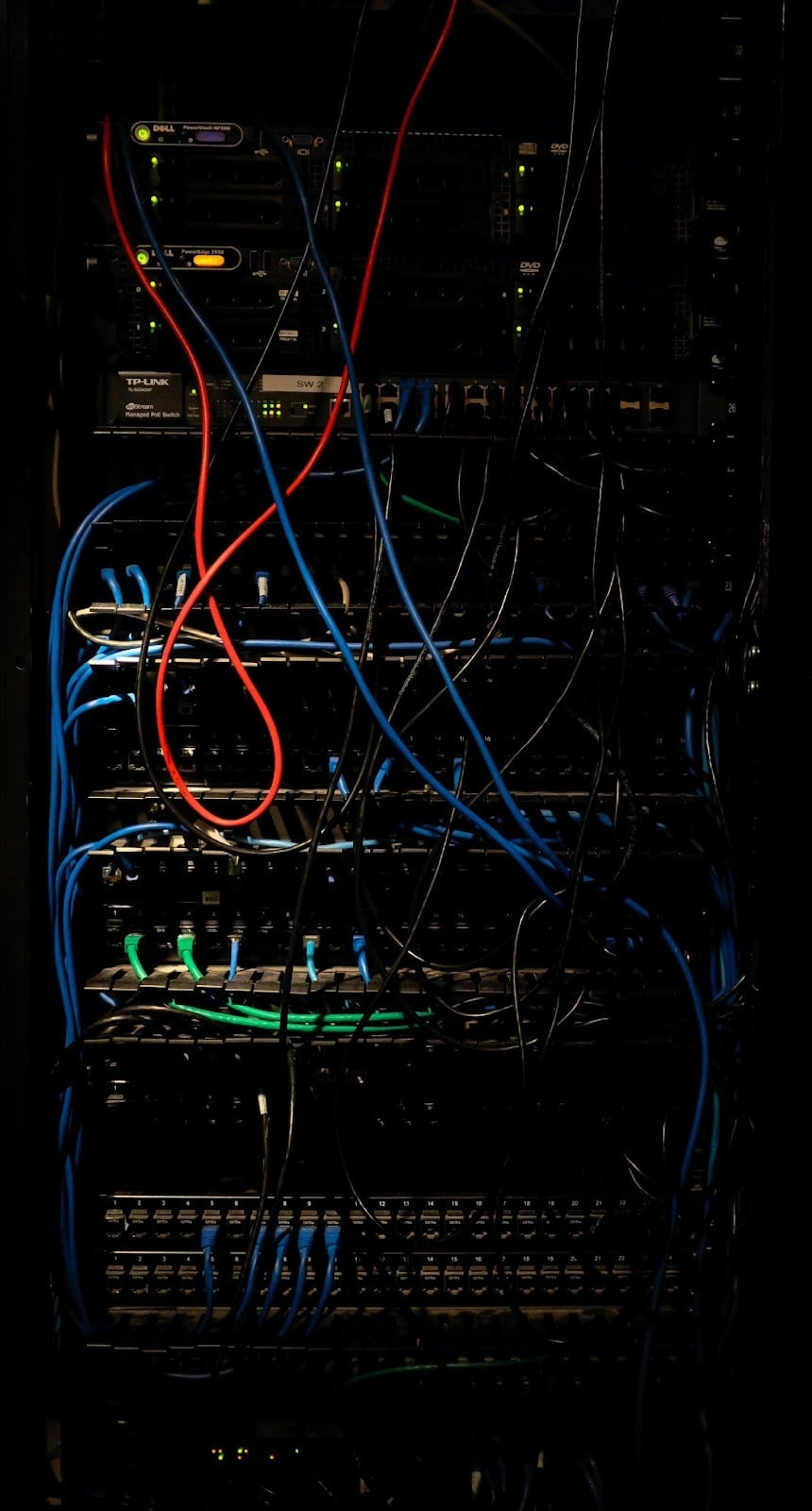
Redundancy Across Infrastructure Layers: Web Server, CDN, and Application
A disaster recovery plan worth the name covers three layers: web server, CDN, and application. Each one breaks in its own way, so each one needs its own redundancy strategy.
Web server redundancy means running more than one server with a load balancer distributing traffic between them. Server goes down, the balancer sends visitors to the others. Cloud platforms like AWS and Google Cloud make this straightforward to configure. You can run identical environments ready to take traffic at all times, or keep standby environments that spin up only when the primary fails. Either way, a single server failure stops being a site-level event.
CDN redundancy means running a multi-CDN strategy. You configure more than one provider. If Cloudflare goes down, traffic routes through Fastly, Bunny, or whoever else you’ve already set up. The switch can be fully automated. It takes work upfront, but the payoff is that no single CDN failure takes your site offline. After February, this stopped being a nice-to-have for ambitious businesses running critical web infrastructure.
Application-level redundancy covers the data and functionality behind your server and CDN layers. Database backups, replicated storage, critical assets living with more than one cloud storage provider. If your WordPress database sits in one location with no replication, a failure there wipes out your entire site regardless of how many CDNs or servers sit in front of it. This layer closes that gap.
All three layers work together. A weakness at any one of them can undo what you’ve built at the other two.
DNS Failover: The Silent Backbone of Redundancy
DNS failover is the most underappreciated piece of this whole picture. It’s the mechanism that actually reroutes traffic when your primary CDN or server stops responding, and it works without anyone touching a keyboard.
The way it works: continuous health checks monitor your primary endpoint on a short interval, pinging it to confirm it’s alive and responsive. When a check fails, DNS records update automatically to point traffic at a secondary endpoint you’ve already configured. Visitors get sent to the backup. Most of them never know anything happened. That automated routing is what turns a CDN failover strategy from theoretical to practical.
How fast the switch happens depends on your DNS TTL (Time-to-Live) setting. Lower TTL means updated records propagate faster across the internet, which means less downtime. Higher TTL reduces DNS lookup overhead during normal operations but slows down failover when it counts. There’s a real tradeoff there, and it’s worth thinking through before you’re mid-crisis.
| Component | Role in DNS Failover |
|---|---|
| Health Checks | Continuously monitor the primary server/CDN’s availability. |
| DNS Records | Store the IP addresses for both primary and backup servers. |
| Automated Routing | Automatically updates DNS records to the backup IP upon failure detection. |
| DNS TTL (Time-to-Live) | Determines how quickly the DNS change is recognized by the internet. |
Setting up DNS failover doesn’t require a big budget or a full DevOps team. Services like Cloudflare’s DNS tools, AWS Route 53, and others provide health-check-based failover out of the box. The real work is making sure your secondary endpoint is actually ready to handle traffic when the primary goes dark.
Building Practical Website Redundancy Architectures
The redundancy setups that actually hold up share two things: they’re automated and reproducible. You should be able to spin up an identical environment from scratch without a lot of manual intervention. If restoring your site after a failure requires someone to SSH into a box and start reconfiguring things by hand, you don’t have a redundancy plan. You have a hope.
Automation does the heavy lifting. Server configuration, application deployment, DNS settings, all of it should be scripted or templated. Tools like Terraform and Ansible exist for this exact reason. When the primary goes down, your backup should already be configured, tested, and accepting traffic. Not “ready to be configured.” Running.
A multi-CDN strategy plugs into this naturally. When your CDN configuration is automated, switching providers during an outage becomes a DNS change, not a scramble. Content is already cached through the secondary. Routing logic is set. Failover triggers are live. You’re not signing up for a new CDN while your site is down. You already have one in place.
For businesses in Horsham, Lansdale, or anywhere across the Philadelphia region, the size of your operation doesn’t exempt you from this thinking. A local company with a WordPress site that drives real revenue is just as exposed to a CDN outage as a Fortune 500. The difference is the Fortune 500 already has multi-CDN architecture built on real infrastructure. Closing that gap is more accessible than most people assume.

Active-Passive vs. Active-Active Redundancy Models
This decision comes down to budget and tolerance more than anything technical.
Active-passive: your backup stays idle until the primary fails. It’s a hot standby. When failure gets detected, traffic reroutes and the passive system picks up. Lower cost since you’re not running two full environments at once. The tradeoff is a brief delay during the switch. For most small-to-midsize businesses, that delay is completely acceptable.
Active-active: two or more systems run simultaneously, sharing the load at all times. One drops, the others keep serving without interruption. No switchover gap, plus you get load balancing benefits during normal operations. The tradeoff is higher costs and more complexity keeping everything synchronized, especially around database state and sessions.
If downtime costs you revenue by the minute, active-active earns its keep. If your site can absorb thirty seconds of failover without significant damage, active-passive delivers strong protection at a friendlier price point. Either model is dramatically better than running with nothing.
Technologies that support both:
- Load Balancers: Spread traffic across servers in active-active setups.
- DNS Failover Services: Automate the switch for either model.
- Cloud Platforms (AWS, Google Cloud): Provide multi-region deployment with built-in redundancy tooling.
- Multi-CDN Management Tools: Handle traffic routing across providers, making CDN-layer failover practical.
Key Tools and Metrics for Redundancy Health Checks
A redundancy plan that’s never been tested is a document, not a safety net. You only know failover works by watching it work under controlled conditions, and doing that regularly.
Health checks are the foundation. Automated monitors test your primary and secondary endpoints on a set interval, verifying responsiveness, correct status codes, and acceptable latency. Most cloud providers and DNS services include this. The Cloudflare dashboard gives you a visual graph of system status, error rates, and latency over time. AWS Route 53 offers comparable monitoring with configurable notifications.
Monitoring alone isn’t enough though. You need fire drills. Take the primary server down intentionally. Block the CDN. Watch traffic reroute to the backup and confirm it actually works. Do this on a schedule. Infrastructure drifts. That backup you tested six months ago might be out of sync now. A recent deployment might have introduced a dependency that breaks failover silently. Testing on a regular cadence catches those problems before your visitors find them.
Set up notifications for the moment a health check fails. An error message or latency spike should trigger an alert, not just a log entry. Sometimes the failover handles things perfectly and you just need to know it fired. Sometimes it doesn’t handle things perfectly, and you need to know that immediately.
If your redundancy hasn’t been tested in the last ninety days, put it on the calendar. Not because something is about to break. Because the entire point of redundancy is being ready before it does.

Frequently Asked Questions
What did the February 2026 Cloudflare outage teach about CDN reliability?
It confirmed no CDN provider is failure-proof. An internal configuration error pulled about 1,100 BGP prefixes offline for six-plus hours. Businesses on a single CDN had no fallback path. Build your own layered redundancy rather than trusting a provider’s uptime SLA to cover every possible failure scenario.
How often should I update and review my redundancy plan?
Review quarterly. Test live failover at least twice a year. Your stack changes, and your redundancy architecture has to change with it. Finding a gap during an actual outage means relying on manual intervention at the worst possible time, which is always slower and more expensive than catching it in a drill.
What are the main risks of neglecting website redundancy?
Extended downtime that directly costs revenue and credibility. Without layered failover, one failure at the server, CDN, or application level takes everything offline. Factor in human error, cyber threats, and hardware problems, and the exposure compounds fast. Businesses that recover quickly planned for failure before it arrived.